
Sven Åke Bjørke

Democracy is the foundation of freedom, equality, and collective decision-making. Democratic societies have greater social mobility, innovation, and respect for human rights. Democracy allows the individual to have a voice. It values participation, accountability, and the rule of law.
Democracy is now under threat from a handful of ruthless and corrupt billionaires. The majority of the world’s oligarchs are tied to the oil and arms industries. The most prominent are Putin, Bin Salman, Trump, and their close associates and CEOs of the world’s richest companies such as Aramco, Exxon, Chevron, Rosneft, Lukoil, the Koch corporations, etc. So far the only men likley to be trillionaires are Bin Salman and Putin, as they have free access to state treasuries. But others are following suit. These billionaires, in an international network of cooperating oligarchs, use their obscene wealth to steal wealth and influence from the “common people”; you and me.
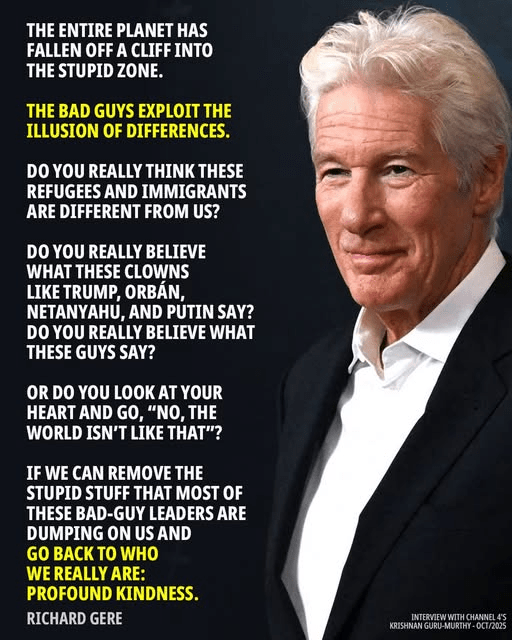
Oligarchy, unlike democracy, concentrates power in the hands of a few wealthy individuals or families. When oligarchs control economic resources, the media, and political institutions, they can undermine democratic processes, influence politics, and stifle the voice of the majority.
Concentration of power erodes public trust, fuels inequality, and fosters authoritarianism. Oxfam says, “Since 2015, the richest 1% have owned more wealth than the rest of the planet.”
“In countries around the world, a small elite is taking an ever-increasing share of national income, while hundreds of millions of people still live without access to clean water and without enough food to feed their families.”
As a rule of thumb, oligarchies are also kleptocracies, where the tiny elite steals from their own people
Global warming is happening now
Global warming, caused by massive emissions of greenhouse gases from the burning of coal, oil, and gas, is now threatening the environment, well-being, survival, and the economy. Increasingly frequent extreme heat waves, droughts, increasing flooding, more extreme weather, wildfires, and the loss of biodiversity are threatening agriculture and food supplies.
Atmospheric rivers can cause severe damage to coastal cities and farmland, while droughts affect inland areas. Combined with shrinking glaciers in the mountains, many rivers are becoming increasingly dry, and droughts threaten the whole of southern Europe, not to mention the Middle East. More precipitation over Scandinavia and a weakened Gulf Stream create climate uncertainty in Norway. A gradually more open polar ocean disrupts the jet streams in the upper troposphere and leads to changes in the usual weather systems
Tipping points are being passed
One tipping point has already been passed: warm-water corals are disappearing, the water is getting warmer and carbon uptake in the ocean is decreasing. The next tipping point could be that the Amazon jungle is partially drying out and becoming savanna. A third tipping point could be the melting of clathrates in northern oceans, where large amounts of the strong greenhouse gas methane are released. In that case, global average temperatures would quickly rise by several degrees. Changes in eco-systems may be predictable and linear for some time, but when the web of life wears too thin, massive changes can take place abruptly and lead to an ecological paradigm shift.
More expensive food, more expensive insurance
Climate change, extreme weather, floods and landslides make life more uncertain. Property insurance is becoming increasingly expensive or is no longer available in some places.
Rising prices for food and insurance are affecting most people, while the richest earn even more.
Millions of climate refugees are already on the way. Insecurity and conflicts are increasing. The richest are taking refuge in fortress-like palaces. Everyone else is picking up the bill. This cannot continue.
Emissions must be reduced
The world must significantly reduce its emissions by 2030 and reach net zero by mid-century to prevent the worst effects of climate change.
Over 80 oil-importing countries, including the EU, have now agreed to cooperate to halve emissions within 10-15 years. China is investing massively in renewable energy. The use of coal and oil should be phased out by 2050. The fossil fuel age should therefore end within 25 years according to this plan. We can only hope that this tight timeframe is sufficient to avoid the worst damage from global warming.
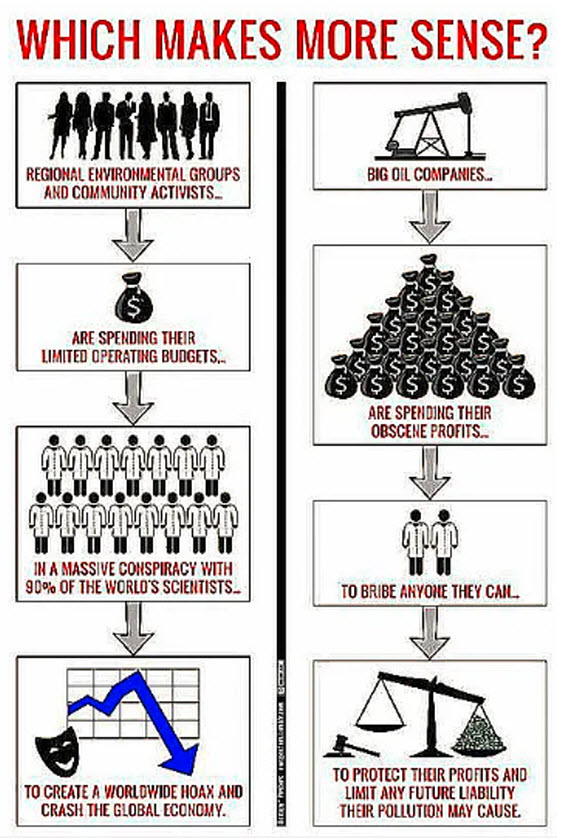
The gradual phase-out of fossil energy is the petro-tyrants’ great fear. Putin’s Russia and the oil dictatorships in the Middle East have few other sources of income. It is logical that Russian internet trolls spread their hate speech and disinformation as much as they can on social media.
We must work together to defend the environment and strengthen democracy. We cannot let the oligarchs win. The transition to a sustainable society must be planned and implemented now. Fortunately, this transition is well underway in many places. Most people realize that the coal and oil age is coming to an end and that it is irresponsible and downright dangerous not to take part in the green shift, regardless of resistance and manipulation from the oligarchs.
Remember that science does not create risk. It reveals it. Less science leaves societies blind to the risks.
We need a world where energy is safe, renewable and serves communities. Not dirty energy that serves corporations and billionaires’ profit.
How to fight the oligarchs and stand up for democracy?
- Stay informed: Knowledge is power. Follow credible news sources, learn about the political process, and fact-check information.
- Participate in elections: Voting is a direct way to express your voice and elect leaders who will defend democratic principles.
- Support independent media: Independent journalism holds the powerful accountable. Support media outlets that challenge oligarchic narratives.
- Participate in peaceful protests: Demonstrations and activism highlight public concerns and can lead to meaningful change.
- Demand transparency in public administration and fair business practices to reduce corruption and undue influence.
- Demand a global tax of at least 2% on all large fortunes to fund the fight against global warming
- Demand the abolition of tax havens.
- Join nonprofits, advocacy groups, and community organizations that defend democracy.
- Share information with friends, family, and colleagues. Collective awareness strengthens democratic resilience.
Stand up for democracy
Solid democratic institutions – such as independent courts, legislatures and regulatory bodies – are essential to check oligarchic power. Leaders must be held accountable and encouraged to serve the common good rather than vested interests. Reforms that promote transparency in campaign finance, anti-corruption measures and fair access to political participation help defend democracy against oligarchy.
A country like Norway has the oil fund. The return from the fund means more to the Norwegian economy than the transfers from the oil sector. Today’s welfare state is not dependent on oil activity. The return from the fund means more to the Norwegian economy than the annual transfers from offshore activities. What really matters in the long run is the general level of education, the general level of competence and ability of innovation. The notion that the welfare state will fall if oil activity is curbed has no basis in reality. A soft landing for oil dependence is necessary. Otherwise, the Norwegian economy risks a solid bout of “Dutch disease”.
Democracy, the environment, a good and long-term economy, justice and equality are values that must be defended – by you, by all of us – now.
References:
- Point of no return: a hellish ‘hothouse Earth’ getting closer, scientists say
- Humanity heating planet faster than ever before, study finds
- Global economy must stop pandering to ‘frivolous desires of ultra-rich’, says UN expert
- Reboot Development: The Economics of a Livable Planet
- World Enters “Era of Global Water Bankruptcy” UN Scientists Formally Define New Post-Crisis Reality for Billions
- Runaway Climate: The Point of No Return
- Flawed economic models mean climate crisis could crash global economy, experts warn
- Countries must seek energy independence through renewables and nuclear, says John Kerry – Former US secretary of state says oil shock driven by war in Iran highlights dangers of reliance on fossil fuels
- Reaching net zero by 2050 ‘cheaper for UK than one fossil fuel crisis’
- Green energy sector drove more than 90% of China’s investment growth last year, analysis finds
- The world is in water bankruptcy, UN scientists report – here’s what that means
- Hot droughts in the Amazon provide a window to a future hypertropical climate
- Tech Billionaires’ AI Space Empire Fantasies Are ‘An Insidious Form of Climate Denial’
- Global economy must move past GDP to avoid planetary disaster, warns UN chief
- The New Climate Paradox: China Decarbonizes While America Subsidizes Coal
- Fossil fuel giants finally in the crosshairs’: Cop30 avoids total failure with last-ditch deal
https://www.theguardian.com/environment/2025/nov/25/fossil-fuel-giants-finally-in-the-crosshairs-cop30-avoids-total-failure-with-last-ditch-deal - US, Russia and Saudi Arabia create axis of obstruction as Cop30 sputters out
https://www.theguardian.com/environment/2025/nov/25/trump-cop30-lacks-us-climate-progress - Ukraine: Das Ringen um Frieden ist auch ein Kampf um Energie und Profit https://table.media/berlin/talk-of-the-town/ukraine-das-ringen-um-frieden-ist-auch-ein-kampf-um-energie-und-profit
- The Fossil Fuel Initiative Colombia and The Netherlands Announce First International Conference for Fossil Fuel Phase Out — The Fossil Fuel Non-Proliferation Treaty Initiative
- Reform Candidate Matthew Goodwin’s MAGA Network
- Fra fossil elefant i rommet til hovedsak
- Only Europe can save Ukraine from Putin and Trump – but will it?
- A shift no country can ignore’: where global emissions stand, 10 years after the Paris climate agreement
- China continues to lead the world in wind and solar, with twice as much capacity under construction as the rest of the world combined
- Wind and solar overtook fossil fuels for EU power generation in 2025, report finds
- ‘Profound impacts’: record ocean heat is intensifying climate disasters, data shows
- Oxfam at the World Summit for Social Development 2025 https://www.oxfam.org/en/world-summit-social-development-2025
- Extreme Inequality and Essential Services https://www.oxfam.org/en/what-we-do/issues/extreme-inequality-and-essential-services
- Just 0.001% hold three times the wealth of poorest half of humanity
- World’s richest 1% have already used fair share of emissions for 2026, says Oxfam
- World Inequality Report 2026
- Rising to the Climate Change Challenge https://www.wri.org/climate
- Project Drawdown®
- UNEP https://www.unep.org
- World Meteorological Organisation https://wmo.int/
- ‘Food and fossil fuel production causing $5bn of environmental damage an hour
- Food becoming more calorific but less nutritious due to rising carbon dioxide
- Global Environment Outlook 7
- Global renewable energy generation surpasses coal for first time
- Asia: Lives upended by cyclones, ‘extreme’ rainfall on the rise, warn UN agencies
- Revealed: Europe’s water reserves drying up due to climate breakdown
https://www.theguardian.com/environment/2025/nov/29/climate-crisis-depleting-europe-groundwater-reserves-analysis - Climate change and extreme weather
- Glaciers to reach peak rate of extinction in the Alps in eight years
- Trump says the big US winter storm is proof of climate hoax – here’s why he’s wrong
- Munich re: How catastrophes limit prosperity – weather disasters are a growing burden, also for many industrialised countries Prevention pays off https://www.munichre.com/en/insights/natural-disaster-and-climate-change/weather-disasters-in-industrialized-countries.html
- Homeowners Sue Oil Companies as Climate Damage Drives up Insurance Rates Homeowners Sue Oil Companies as Climate Damage Drives up Insurance Rates – Inside Climate News
- How climate breakdown is putting the world’s food in peril – in maps and charts
https://www.theguardian.com/environment/ng-interactive/2025/dec/18/how-climate-breakdown-is-putting-the-worlds-food-in-peril-in-maps-and-charts - Climate tipping points — too risky to bet against
- Death toll from Indonesia floods passes 700 as 1 million evacuated https://www.theguardian.com/world/2025/dec/02/indonesia-floods-one-million-people-evacuated-death-toll-rises
- Sri Lanka and Indonesia deploy militaries as Asia floods death toll passes 1,100 https://www.theguardian.com/world/2025/dec/01/asia-flood-sri-lanka-indonesia-deploy-military
- How cyclones and monsoon rains converged to devastate parts of Asia – visual guide https://www.theguardian.com/world/2025/dec/01/asia-floods-visual-guide-flooding-extreme-weather-cyclones-monsoon
- New Report Warns of Critical Climate Risks in Arab Region
- ‘Even the animals seem confused’: a retreating Kashmir glacier is creating an entire new world in its wake
- Global Warming: A Tale of Power, Deception, and Dependency
- Systematic disinformation about Global Warming

 Education for Sustainable Development